
The Middle East is burning again, and this time the fire is spreading fast. Iran retaliation threats have moved from words to action, and fresh US military strikes Iran have pushed the region into its most dangerous phase in years. Iran’s leadership is no longer just warning Washington. They are promising to crush every remaining target if Trump follows through on his latest threats.
As Iran Steps Up Retaliation, this war did not start overnight, but the last few days have completely changed its tone, dragging in Gulf neighbors and rattling global oil markets. For Pakistan, sitting right next to this storm, the stakes go beyond politics. They hit our fuel prices and remittance flow directly, and every time Iran Steps Up Retaliation, that pressure grows a little more. This is exactly why the Iran Steps Up Retaliation story is one worth watching closely.
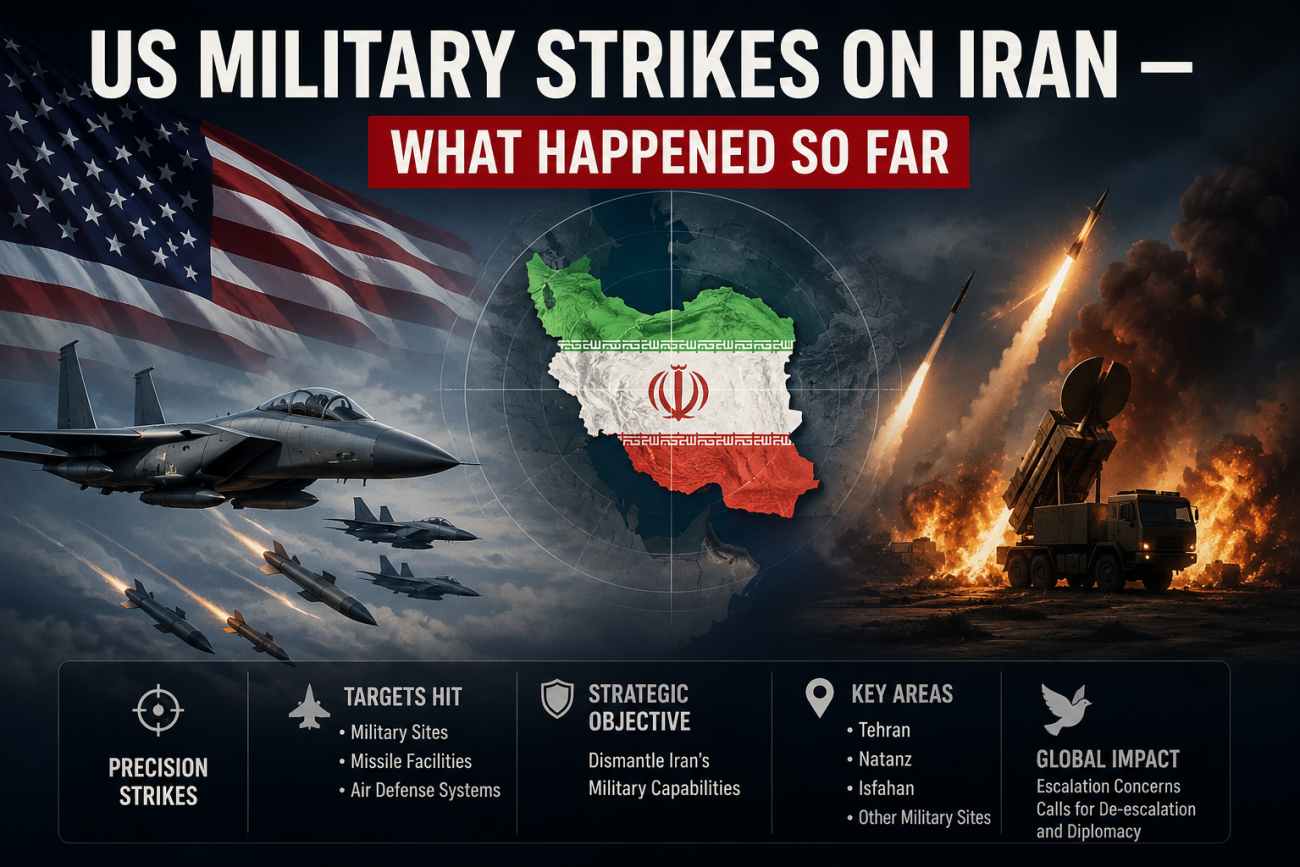
US Military Strikes on Iran — What Happened So Far
Centcom confirmed a fresh wave of attacks on Iranian soil that wrapped up late at night. The Centcom statement mentioned that forces targeted command centers, air defense sites, and coastal surveillance facilities near Bandar Abbas. This Bandar Abbas attack was designed to weaken Iran’s ability to threaten ships passing through the Strait of Hormuz, one of the busiest oil routes on the planet.
These are not random hits either. The Pentagon has been using precision airstrikes to avoid heavy civilian casualties while still crippling Iran’s military infrastructure. Bridges, power plants, and missile storage sites have all come under fire in what officials are calling a strategy to force Iran back to the negotiating table. Trump himself said things would get “really bad” for Iran if talks did not resume soon, and so far, he has kept that promise.
Iran’s Response and Retaliation Threats
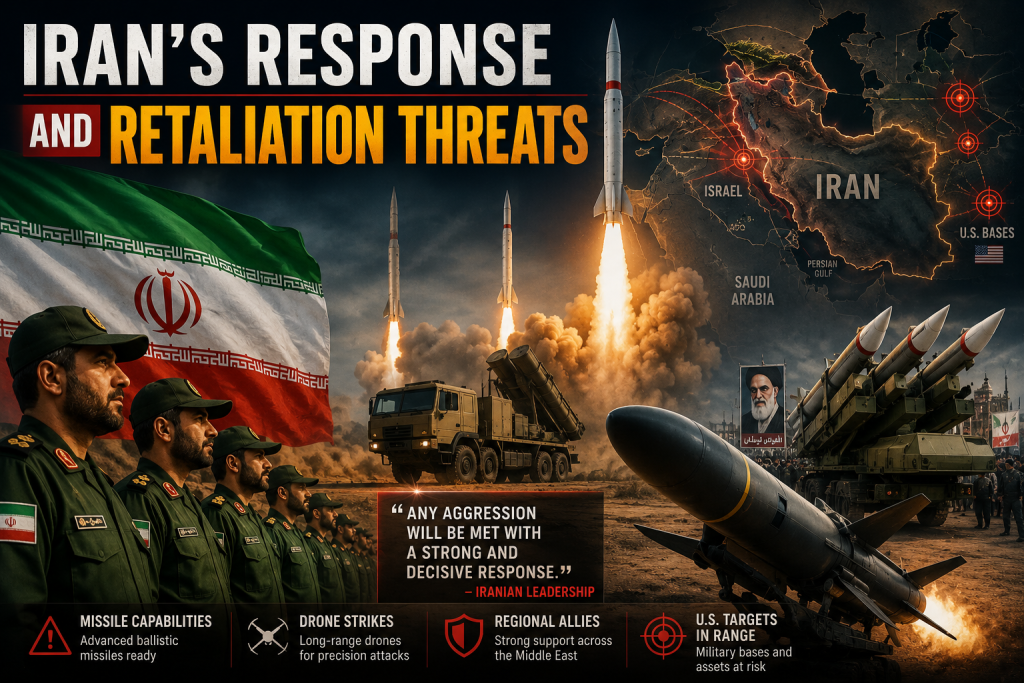
Iran is not backing down, and honestly, nobody expected them to. A spokesperson for Iran’s top military command warned that any further attack on infrastructure would be met with total destruction of what remains standing. This is where the Iran retaliation threat becomes real rather than just political theater. The message was blunt: the Revolutionary Guard (IRGC) will not tolerate outside interference in the Strait of Hormuz, calling it their “invincible red line.”
Iran Steps Up Retaliation as tensions in the region keep climbing. Reuters reported that Iran has reportedly asked Yemen’s Houthi rebels to prepare for a possible Red Sea shipping blockade if the US carries out its threatened strikes. This would open a second front in the conflict, hitting global trade routes far beyond the Persian Gulf. Iran’s Foreign Ministry also issued its own warning this week, with a spokesperson saying plainly that our hands are not tied.
Strait of Hormuz Crisis — Why It Matters for Global Oil Supply
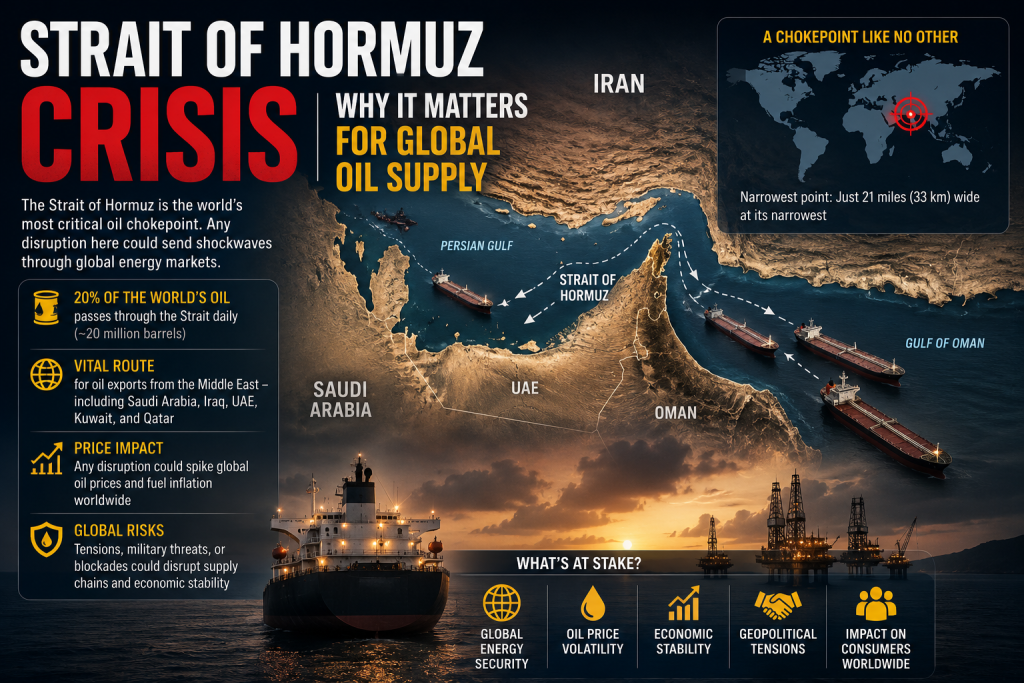
Most people hear “Strait of Hormuz” and shrug, but this narrow waterway carries roughly a fifth of the world’s oil supply every single day. Any disruption here sends shockwaves through Brent crude oil and West Texas Intermediate crude prices almost instantly. The ongoing Strait of Hormuz crisis is exactly why petrol pumps from Texas to Torkham feel the pinch whenever tensions in this region spike.
Here’s a quick snapshot of why this strait matters so much:
| Factor | Why It Matters |
|---|---|
| Daily oil flow | Around 20% of global oil consumption passes through here |
| Alternative routes | Very limited, making disruption almost impossible to avoid |
| Countries affected | Nearly every oil-importing nation, including Pakistan |
| Price sensitivity | Even rumors of closure can spike prices within hours |
Brent crude was trading near $84 a barrel this week, and WTI sat close to $79. Analysts warn that a full blockade could push prices well past the $100 mark, triggering a genuine global oil supply disruption that no country, including Pakistan, would be able to dodge.
Iran Steps Up Retaliation as Gulf States Get Caught in the Crossfire (Kuwait, Bahrain, Qatar)
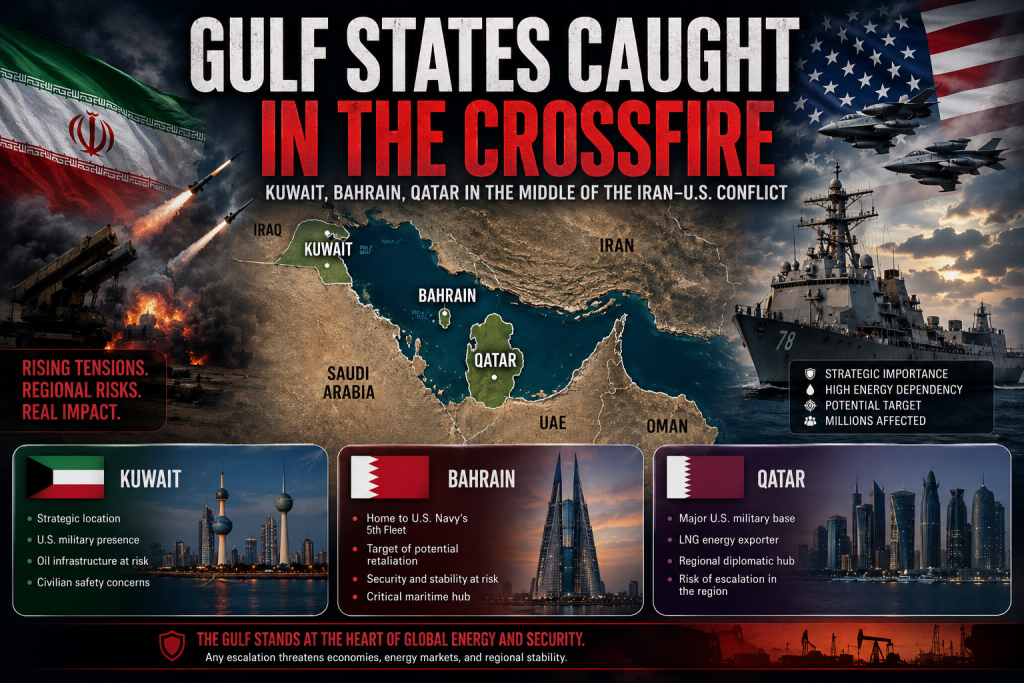
The Persian Gulf tensions are no longer contained to just Iran and the US. Kuwait’s air defense systems have already responded to hostile drone activity near its borders, and Bahrain went as far as activating warning sirens, urging residents to seek shelter immediately. These are not drills. These are real responses to a war that keeps spilling over its original boundaries.
Qatar, home to a major US military base, is watching all of this with obvious nervousness. If Iran decides to widen its retaliation, Gulf states with American installations become natural targets. This puts millions of Pakistani expatriates working across the Gulf region directly in harm’s way, which brings us to why this war is not just someone else’s problem for us.
How the Conflict Is Affecting Pakistan’s Economy
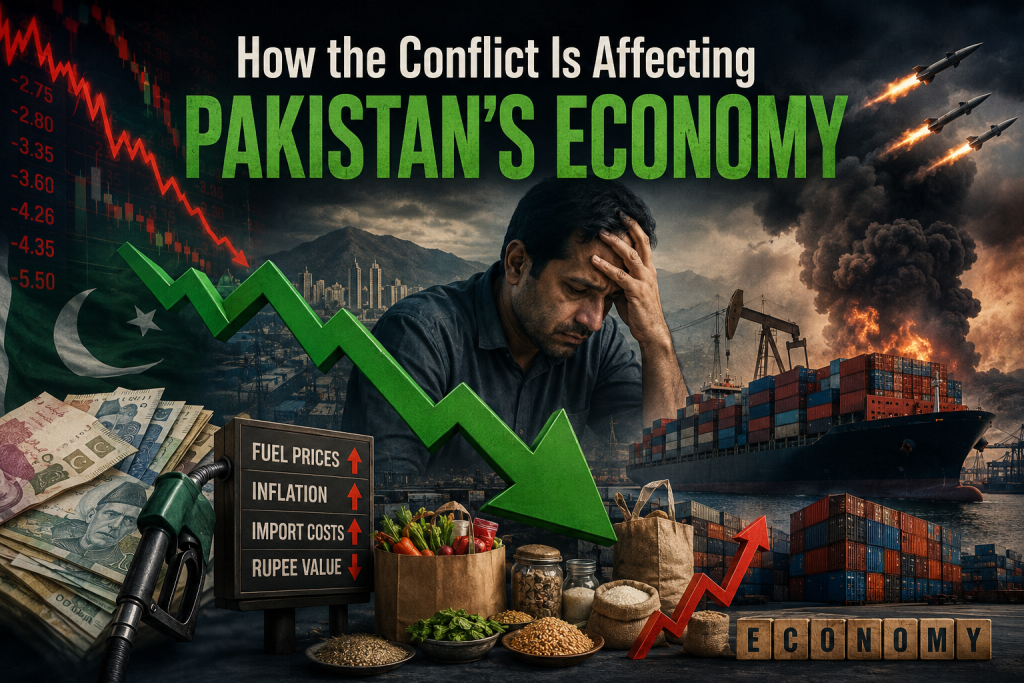
This is where things get personal for Pakistani readers. Millions of our workers are employed across the Gulf, and their remittances form a massive chunk of our foreign exchange reserves. Any escalation that disrupts life or work in these countries could slow down that flow of money, putting pressure on an already fragile rupee.
The Pakistan Stock Exchange has already shown jitters, reacting to global oil price swings tied to this Middle East conflict escalation. Import costs for fuel and related goods are climbing, and that pressure eventually trickles down to everyday consumers. It is a chain reaction: war abroad, oil prices up, import bill higher, rupee weaker, and inflation knocking on our doors once again.
Impact on Fuel Prices and Inflation in Pakistan
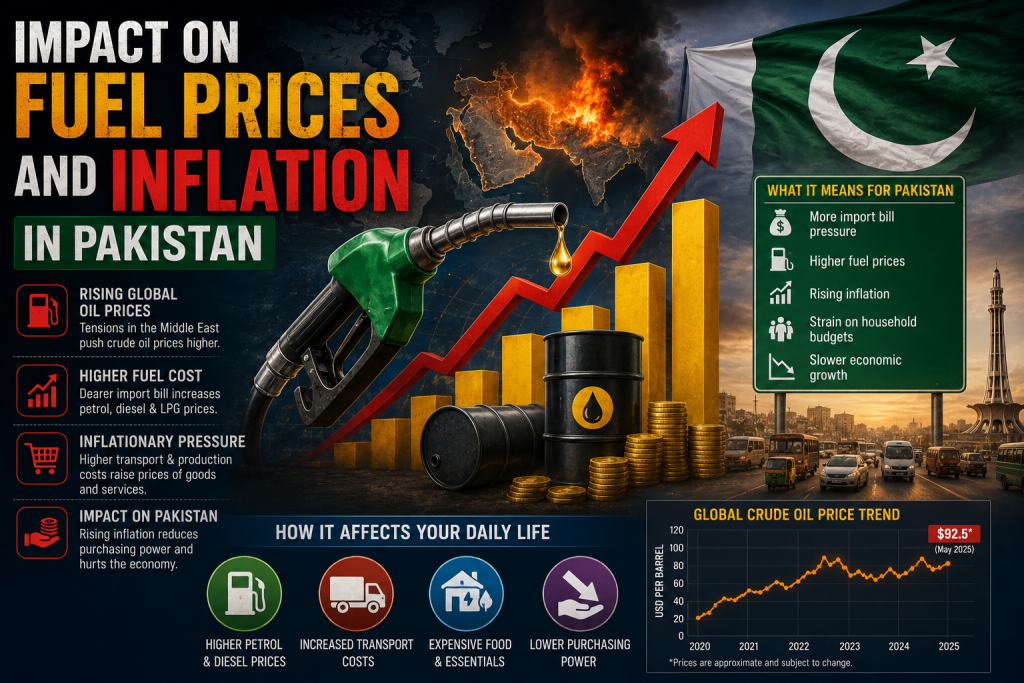
Let’s talk numbers that actually matter to your monthly budget. Pakistan imports a huge share of its oil, so when oil price surge trends hit international markets, our petrol and diesel prices follow within weeks, sometimes days. OGRA typically adjusts local fuel prices based on these global shifts, and with oil exports disruption looming, another price hike feels almost inevitable.
Higher fuel costs do not stay isolated either. Transport fares go up, which pushes food prices higher, which then affects nearly every household expense you can think of. Economists are already warning that continued Iranian infrastructure strikes and the resulting ceasefire collapse could add another one to two percent to Pakistan’s inflation rate over the coming months if the war drags on.
International Reactions — US, China, and the UN
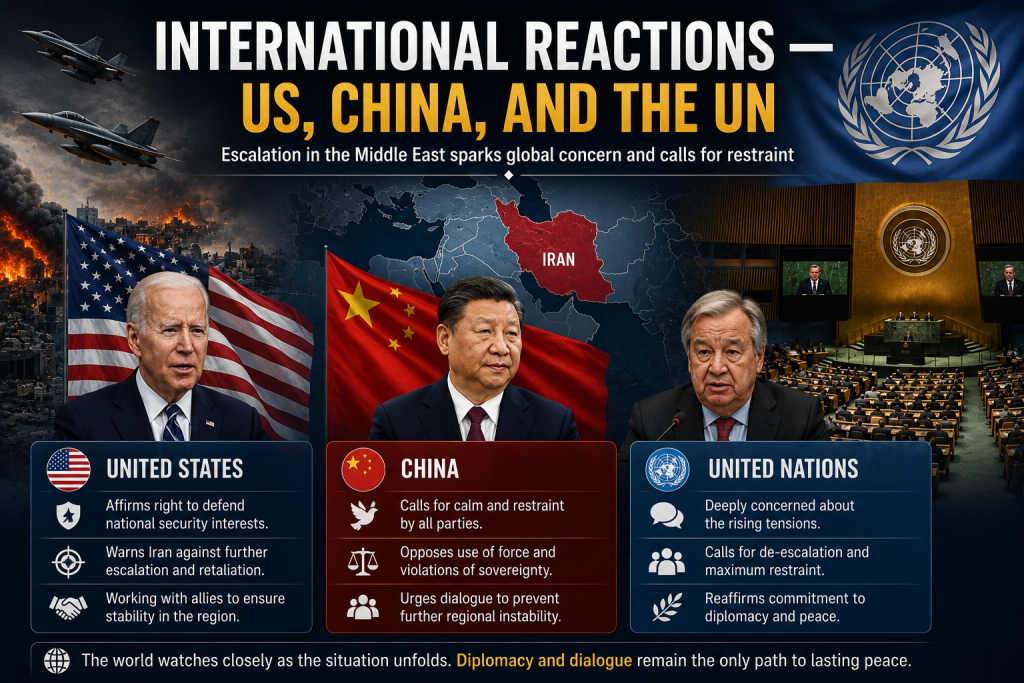
China has taken a notably firm stance, with its Iran-China Chamber urging Tehran to formally declare a state of war rather than continuing informal skirmishes. This reflects Beijing’s deepening economic ties with Iran and its discomfort with prolonged instability affecting its own oil imports. Meanwhile, back home in Washington, the war powers act debate has resurfaced, with several lawmakers questioning Trump’s authority to continue strikes without formal congressional approval.
The US House also voted down a motion to cut funding to Israeli military operations, signaling continued American backing despite growing domestic criticism. A genuine diplomatic breakthrough still feels far off, though Trump himself claimed this week that Iranian officials expressed interest in resuming talks. Whether that translates into actual Iran nuclear negotiations or just more stalling remains to be seen.
Iran Steps Up Retaliation What Happens Next? Expert Predictions and Possible Outcomes
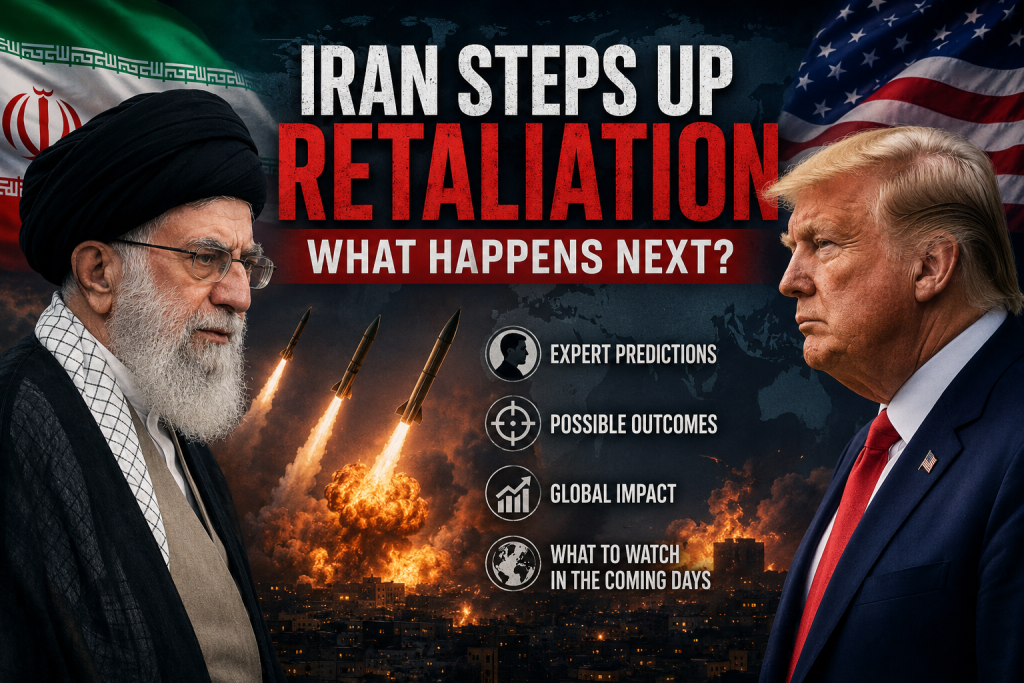
Most analysts believe this conflict is heading toward a prolonged stalemate rather than a quick resolution, even as Iran Steps Up Retaliation with each passing week. Clark Summers, an adjunct professor at Belmont Abbey College, explained the situation clearly in comments shared with international media. He believes the strikes will keep working well in the short term, taking out drones and missile sites as they pop up, but they won’t settle the war for good since Iran can simply keep building more, which is exactly why Iran Steps Up Retaliation every time Washington escalates.
That single line sums up the entire mess pretty well. Trump Iran strategy appears focused on wearing down Iran’s military capacity without committing to a full ground invasion, something experts agree current US forces are not equipped to sustain long term. With midterm elections impact weighing on Trump’s political calculations, a full-scale war seems politically risky, but so does backing down after such public threats. For now, expect more strikes, more warnings, and very little movement toward genuine peace.
Frequently Asked Questions ( FAQs)
Is Pakistan directly involved in the Iran-US war?
No, Pakistan is not a military participant. However, the economic ripple effects through oil prices and Gulf remittances directly affect Pakistani households.
Will petrol prices in Pakistan increase because of this war?
Yes, continued fighting and any blockade of the Gulf shipping routes will likely push global oil prices higher, and Pakistan’s fuel prices typically follow within weeks.
What is the Strait of Hormuz, and why does it matter?
It is a narrow waterway between Iran and Oman through which about a fifth of the world’s oil supply travels daily. Blocking it would disrupt global energy markets significantly.
Could this conflict affect Pakistani workers in the Gulf?
It’s possible. Rising commercial vessels attacked incidents and regional instability could affect job security and safety for Pakistani expatriates working in Gulf countries.
