
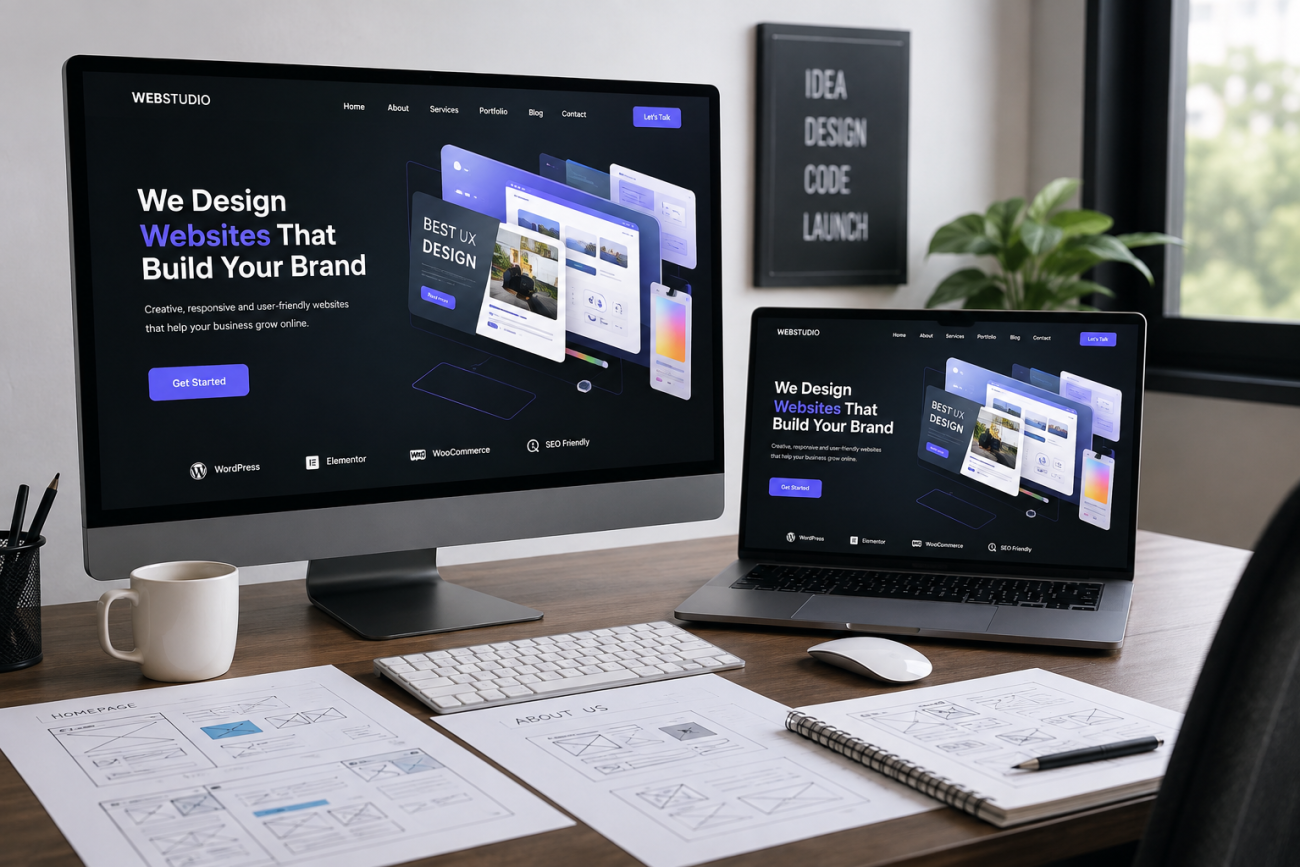
Every business owner in Pakistan has heard the same advice by now: get a website, get online, get found. But nobody tells you what happens after that advice lands. You open Google, type “web design,” and get buried under a thousand agencies promising the world. This guide cuts through that noise. We will walk you through what web design really means, how the process works, and what separates a website that grows your business from one that just sits there looking pretty.
Whether you run a small boutique in Lahore or a growing tech startup in Islamabad, the way your site is built decides whether visitors stay or bounce. Good web designing is not about flashy colors. It is about structure, speed, and trust. Let us break it down step by step.
What Is a Web Designing Process and Why It Matters
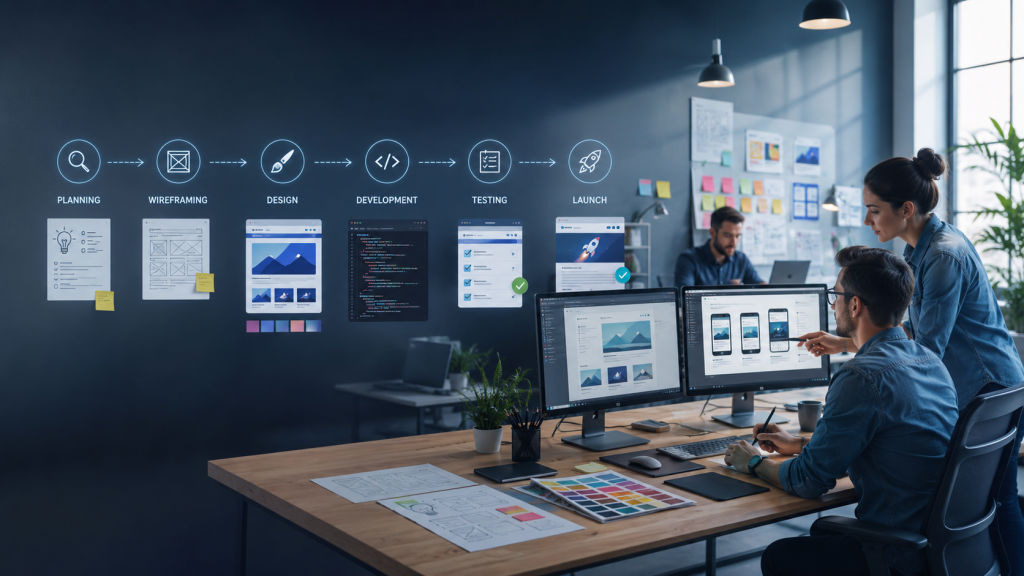
A web design process is simply the roadmap a designer or agency follows to take your idea from a blank screen to a live website. Good web designing covers research, layout planning, visual design, coding, and testing. Without this roadmap, projects drift. Deadlines slip. Costs balloon. Pakistani business owners who skip proper web designing structure often end up with a template-free design that looks rushed and confuses visitors instead of guiding them.
This matters because your website is often the first impression a customer forms of your brand. A messy, slow, or confusing site pushes people straight to your competitor’s tab. A well-planned custom website design builds trust before you ever say a word. That first impression, formed in under three seconds, decides whether someone reads further or leaves.
Key Stages of a Professional Web Design Process
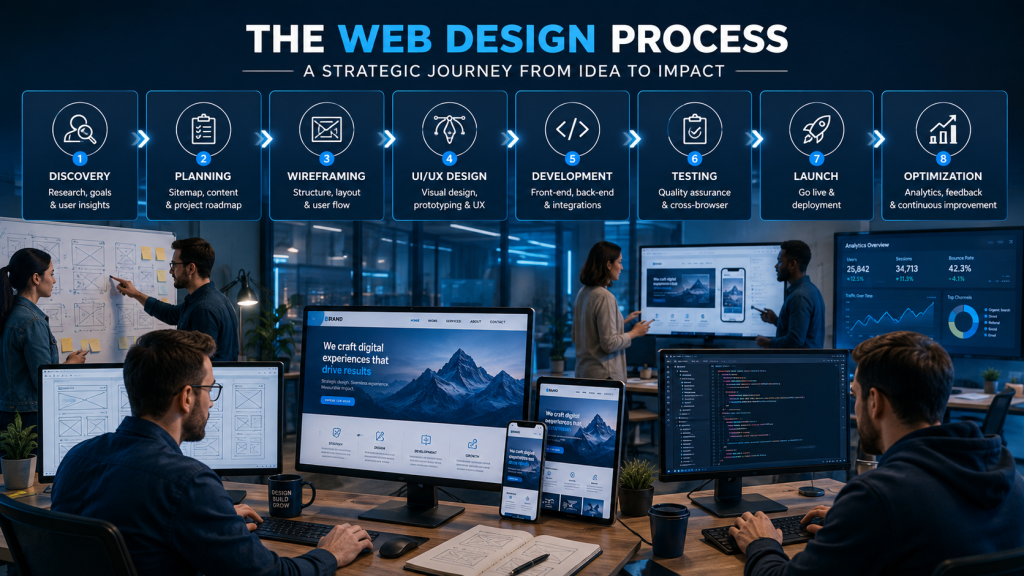
Every solid web design build process follows a rhythm, even if the names change from agency to agency. Good web designing usually starts with the discovery phase, where the team learns about your business, your customers, and your goals. Next comes wireframing, a rough sketch of where content and buttons will sit for the web design layout. Then the visual design stage adds color, typography, and imagery that reflect your brand.
After design comes the design and development phase, where developers turn static mockups into a working site using clean code integration. Testing follows closely behind, checking every button, form, and page across devices. Finally, the website launch happens, followed by monitoring to catch any last bugs. Skipping any of these stages almost always shows up later as a costly fix.
| Stage | What Happens | Typical Duration |
|---|---|---|
| Discovery | Research, goals, audience mapping | 1–2 weeks |
| Wireframing | Layout and structure planning | 1 week |
| Visual Design | Colors, fonts, imagery | 2–3 weeks |
| Development | Coding and CMS setup | 3–5 weeks |
| Testing & Launch | QA, bug fixes, go-live | 1–2 weeks |
In-House Team vs. Web Design Agency: Which One Should You Choose
Hiring an in-house designer sounds appealing until you count the real cost. Salaries, tools, training, and management time add up fast for most Pakistani startups. A single hire also limits you to one skill set, while good web design needs coding and SEO working together too. That gap is exactly why many businesses turn to a web designing expert or agency instead of building a team from scratch.
An agency brings a ready web design team: designers, developers, and strategists who have already solved the problems you are about to face. You pay for the project, not for twelve months of salary. That said, in-house teams make sense for large companies needing constant updates. For most small and medium Pakistani businesses though, web designing through an agency delivers a stronger premium touch without the long-term overhead.
How to Choose the Right Web Design Agency for Your Project
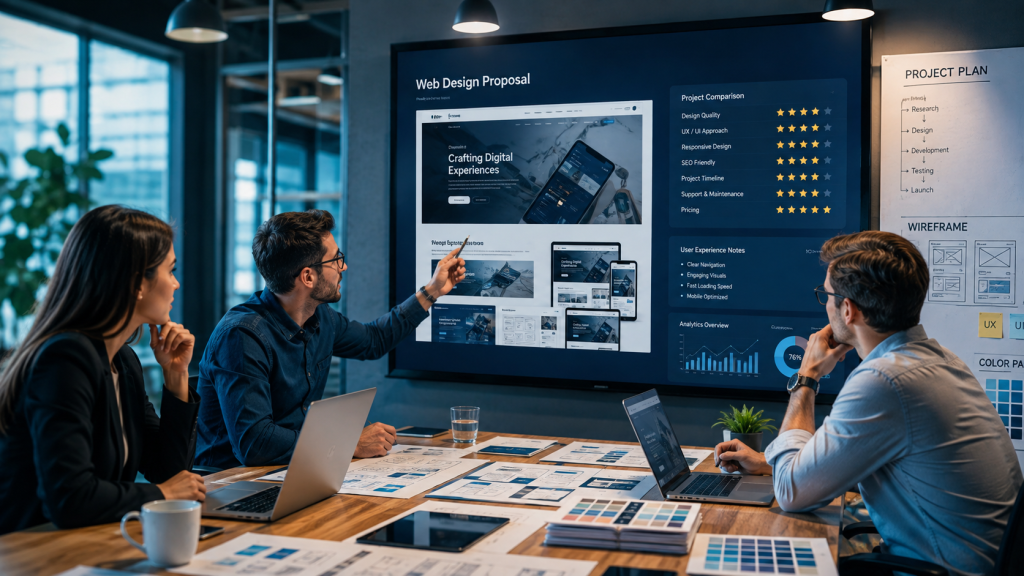
Not every agency deserves your budget when it comes to web design. Start by checking their past work. Ask for real case studies, not just screenshots. A trustworthy web design agency in Pakistan will happily walk you through their previous projects and explain the thinking behind each decision, not just show you a pretty portfolio and hope you do not ask questions about their web designing process.
Watch for red flags too. Unrealistic promises like “first page ranking in one week” or prices far below market rate usually mean corners will be cut somewhere. Before signing anything, ask about timelines, revision limits, who owns the final files, and what happens after launch. These questions protect you from the headaches that quietly derail so many web design projects across Pakistan.
Essential Elements of a High-Converting Homepage Design
Your homepage carries more weight than any other page on your web design. It needs a clear headline that tells visitors exactly what you offer within seconds. Good web designing pairs that with a strong call-to-action button, something as simple as “Get a Free Quote” or “Order Now,” placed where the eye naturally lands. This single web design choice often defines whether a page becomes conversion-focused material or just another forgettable page.
Trust signals matter enormously for Pakistani consumers who are still cautious about online transactions. Displaying a WhatsApp contact button, showing prices in PKR clearly, and featuring real customer reviews all build confidence. Combine these with a smooth conversion flow from headline to checkout, and your homepage stops being decoration and starts being a genuine sales tool.
Website Accessibility Checklist Every Design Process Should Follow
Accessibility often gets ignored until it becomes a legal or reputational problem. Simple choices, like adding alt text to images, using readable color contrast, and making sure buttons work with a keyboard, open your site to a much wider audience, including people using screen readers. This is not just kindness. It is good business, since excluded visitors are lost customers too.
Given Pakistan’s mobile-heavy internet usage, accessibility also means mobile accessibility. Text should be readable without zooming, buttons should be large enough for a thumb, and forms should not frustrate users on a shaky 4G connection. A responsive web design that respects these basics keeps your site usable for everyone, not just the visitors with the newest phones and fastest internet.
Creating a Seamless User Experience (UX) During Design
Good UX feels invisible. Visitors do not notice smooth navigation, they only notice when it is missing. Menus should be predictable, search bars should actually work, and every click should lead somewhere logical. Confusing navigation is one of the fastest ways to lose a visitor who arrived ready to buy but left frustrated instead.
Page speed plays a huge role here too, especially in Pakistan where internet speeds vary widely between cities. A site bogged down with heavy images or bloated code drives people away before they see your offer. Prioritizing fast load times and site speed optimization during design keeps visitors engaged and signals to Google that your high-performance website deserves better rankings.
Common Mistakes That Delay or Derail a Web Design Project

Scope creep kills more web design timelines than anything else. A client asks for “just one more page” or “a small tweak” repeatedly, and suddenly a six-week project stretches into four months. Setting clear requirements upfront, in writing, prevents most of this chaos before it starts and keeps both sides accountable to the original plan.
Ignoring mobile users is another costly error, especially since most Pakistani traffic now comes from smartphones. Skipping proper testing before launch is the third big mistake, leaving broken forms or slow pages live for real customers to discover. Careful planning during the design and development phase avoids almost all of these headaches entirely.
Pro Tips for a Smooth, On-Time Web Design Process
Set realistic milestones from day one, and put them in writing so everyone stays accountable. Vague timelines like “a few weeks” invite delays, while specific dates like “wireframes ready by the 15th” keep projects moving. Clear, frequent communication with your designer or agency also prevents small misunderstandings from becoming expensive redesigns later.
Tools like Figma for design review and Trello or Asana for task tracking make collaboration far smoother, even across remote teams. Reviewing progress weekly, rather than waiting until the end, catches issues early when they are cheap to fix. These small habits are often the real difference between a project that finishes on time and one that drags.
Cost, Timeline, and What to Expect After Launch (Maintenance & Support)
Web design costs in Pakistan vary widely depending on complexity, platform, and agency experience. A simple informational site might run between PKR 40,000 to 150,000, while a full e-commerce build with custom features can reach PKR 300,000 or more. Timelines usually range from four to ten weeks depending on scope and how quickly feedback gets returned.
Launch is not the finish line. Website maintenance keeps your site secure, updated, and running smoothly long after the confetti settles. This includes regular backups, plugin updates, and monitoring for a possible website redesign down the road as your business grows. Budgeting for ongoing support upfront avoids nasty surprises when something breaks six months later.
Frequently Asked Questions(FAQs)
1: How much does web design cost in Pakistan?
Costs typically range from PKR 40,000 for a basic site to over PKR 300,000 for a complex e-commerce platform, depending on features and agency experience.
2: How long does a website take to build?
Most projects take between four and ten weeks, depending on how detailed the design is and how quickly the client provides feedback and content.
3: Should I choose WordPress, Shopify, or Webflow for my business? WordPress
suits content-heavy sites needing flexibility, Shopify fits online stores wanting built-in e-commerce tools, and Webflow works well for design-focused brands needing a custom look without heavy coding.
4: Do I need a web design agency, or can I build it myself?
DIY builders work for very simple sites, but a web design agency brings design, coding, and SEO expertise together, usually resulting in a stronger, more growth-focused website.
Final Thoughts
Web design is not a one-time task you check off a list. It is an ongoing investment in how your business shows up online. From that first discovery phase conversation to the final performance tuning after launch, every stage shapes whether your site becomes a lead-generating website or just another forgotten link. Pakistani businesses that treat their website as a growing asset, not a static brochure, are the ones pulling ahead.
Whether you decide to work with a local agency or build a small team of your own, keep the fundamentals close: clear brand messaging, honest website analytics to guide decisions, and a design that respects your audience’s real habits. That is what turns a decent site into one that actually works for you, day after day.
Related Links:
https://webhelp.pk IT Solutions & Development Technical Support Company
https://infusions.pk Organic Herbal Store
https://eeshaal.com Travel & Tour Company
https://gulbergoffice.com Real Estate Company
