
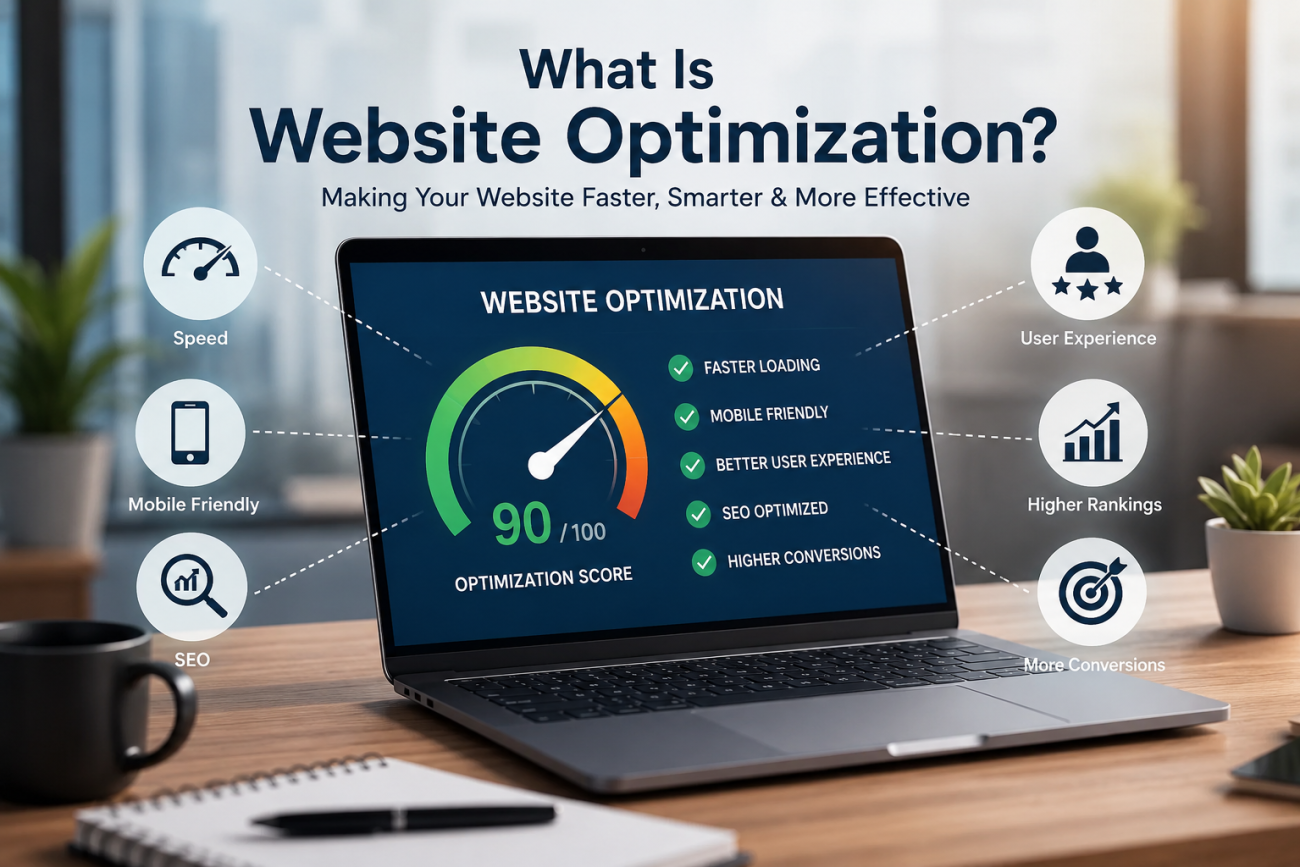
Every business owner in Pakistan wants the same thing from their website. More visitors, more inquiries, and more sales. Yet thousands of websites sit online today doing none of that. They load slowly, confuse visitors, and rank nowhere near page one on Google.
The fix is not a redesign. It is website optimization. This guide walks you through what it means, why it matters for your business, and exactly how to do it step by step, written specifically with the Pakistani market in mind.
What Is Website Optimization?
Website optimization is the ongoing process of improving a site so it performs better across search visibility, speed, usability, and conversions. It touches everything from the code running behind the scenes to the words a visitor reads on the homepage. Think of it less as a one-time task and more as regular maintenance, the same way you would service a car to keep it running smoothly.
Many business owners assume optimization only means adding keywords to a page. That is a narrow view. Real website optimization blends technical improvements, content quality, user experience (UX), and conversion optimization into one connected strategy. When these pieces work together, your site becomes easier to find, faster to use, and more likely to turn a visitor into a customer.
Website Optimization Meaning in Simple Terms
In plain words, website optimization means making your website work harder for you. A well-optimized page loads fast, answers the visitor’s question clearly, and guides them toward the next step, whether that is calling your shop or filling out a form.
How It Differs From Web Design or Development
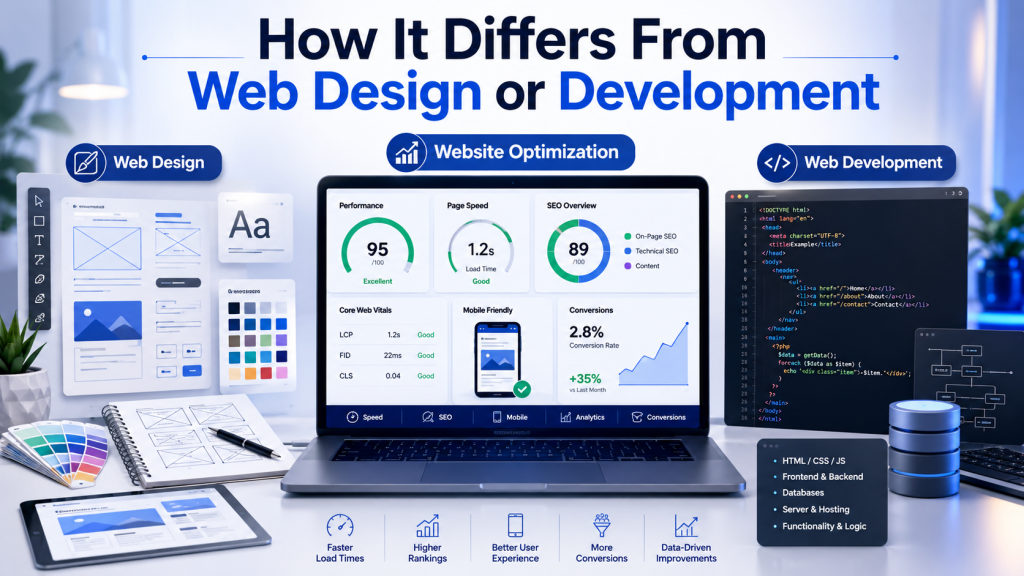
Web design focuses on how a site looks. Development focuses on how it functions. Optimization sits above both, constantly measuring performance and refining what already exists to improve search engine rankings and user satisfaction over time.
Why Website Optimization Matters for Your Business
Pakistani businesses are moving online faster than ever, from Karachi retailers to Lahore based service providers. But a website that simply exists is not enough anymore. Competition on Google.com.pk has grown sharp, and users abandon slow or confusing pages within seconds. This is where website optimization becomes the difference between a site that generates leads and one that quietly gathers dust.
An optimized website directly supports organic traffic growth, stronger search visibility, and better customer journey flow from the first click to the final purchase. It also builds trust. A fast, mobile friendly, easy to navigate site tells visitors your business is credible, even before they read a single word of your content.
Impact on Search Rankings and Visibility in Pakistan
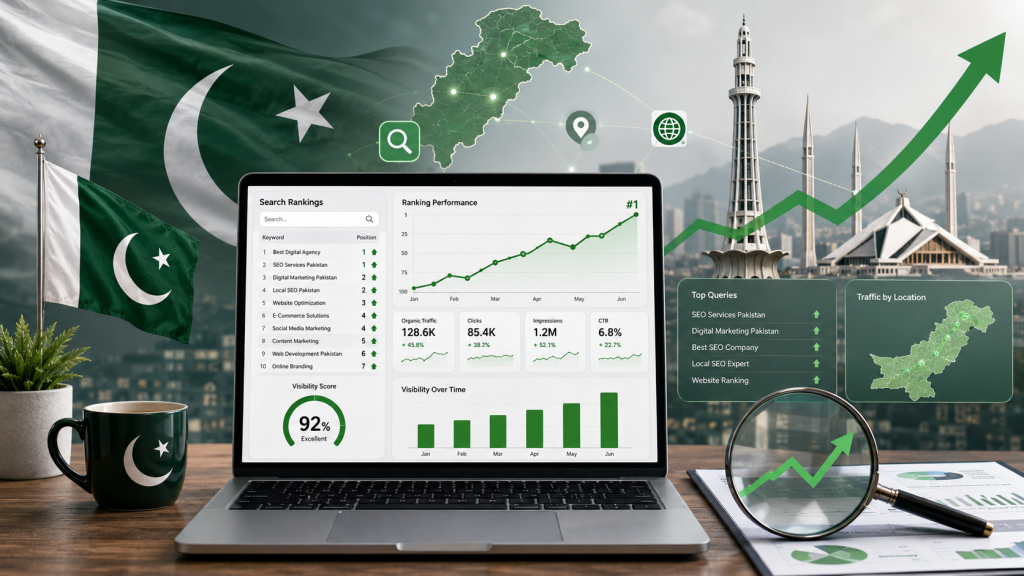
Google rewards sites that load quickly and satisfy user intent. Poor site speed or thin content pushes you below competitors who have invested in proper optimization, even if your product or service is better.
How It Affects Sales, Leads, and Customer Trust
Every second of delay costs you conversions. Studies consistently show that faster, cleaner websites see lower bounce rate reduction issues and significantly higher form submissions and sales inquiries.
Key Types of Website Optimization
Website optimization is not one single activity. It is a group of connected disciplines, each targeting a different part of the user’s experience. Understanding these types helps you prioritize where to spend your time and budget first.
The table below breaks down the main categories and what each one focuses on.
| Type of Optimization | Primary Focus | Example Improvement |
|---|---|---|
| SEO optimization | Search visibility and rankings | Optimizing metadata and headings |
| Performance optimization | Site speed and stability | Compressing images, enabling caching |
| UX optimization | Ease of navigation and use | Simplifying menus and forms |
| Conversion Rate Optimization (CRO) | Turning visitors into customers | Clearer calls-to-action (CTAs) |
| Content optimization | Relevance and depth of information | Updating outdated blog posts |
| Mobile optimization | Experience on smartphones | Responsive layouts for small screens |
| Accessibility optimization | Usability for all users | Adding alt text and color contrast |
SEO Optimization
SEO optimization improves how easily search engines can crawl, understand, and rank your pages. It includes keyword research, metadata writing, and internal linking between related content on your site.
Performance (Speed) Optimization
Performance optimization targets how fast your pages load. Slow websites drive users away before they even see your offer, so this area directly protects your website performance and revenue.
UX (User Experience) Optimization
UX optimization makes navigation intuitive. Clear menus, readable fonts, and logical page flow all contribute to stronger website usability and happier visitors.
Conversion Rate Optimization (CRO)
Conversion Rate Optimization (CRO) focuses on getting more value from the traffic you already have. Better landing pages, trust signals, and A/B testing all fall under this category.
Content Optimization
Content optimization improves the depth, accuracy, and freshness of your written material. This keeps content quality high and answers the exact questions your Pakistani audience is searching for.
Mobile Optimization
Most Pakistani internet users browse on their phones. Mobile responsiveness is no longer optional, it decides whether a visitor stays or leaves within the first few seconds.
Accessibility Optimization
Accessibility optimization ensures people using screen readers, keyboard navigation, or assistive tools can still use your site comfortably, supporting inclusive design for every visitor.
Key Elements of a Well-Optimized Website
A genuinely optimized website is built on a handful of core elements working together rather than in isolation. Weakness in one area often drags down the rest, so it helps to view your site as a connected system rather than separate pages.
Strong site structure, solid technical health, and quality content form the backbone of that system. Together they support both digital experience for visitors and long term growth in search engine results.
Site Structure and Navigation
A logical structure lets both users and search engines move through your site with ease. Clear categories, breadcrumb trails, and simple menus reduce confusion and keep visitors exploring longer.
Technical Health
This covers crawlability, secure HTTPS connections, and properly indexed pages. Without solid technical health, even great content can remain invisible to Search Engine results entirely.
Content Quality and Relevance
Content must answer real questions with accurate, useful detail. Thin or outdated pages hurt credibility and push visitors toward competitors offering better answers.
How to Optimize a Website: Step-by-Step Process
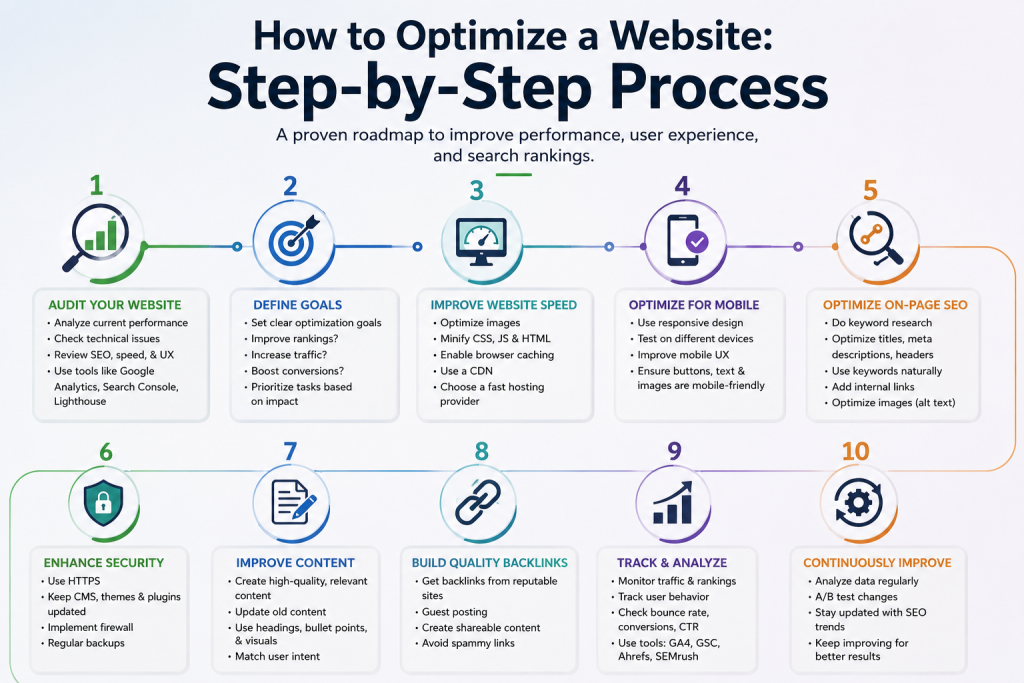
Optimization should never be random guesswork. It works best as a structured sequence, starting with clear goals and ending with continuous testing. Skipping steps often means fixing symptoms instead of root causes.
Below is a practical process any Pakistani business, from a small clothing brand to a large real estate consultancy, can follow to improve results steadily.
| Step | Action | Purpose |
|---|---|---|
| 1 | Set goals and audit the site | Understand current gaps |
| 2 | Conduct keyword research | Target real search demand |
| 3 | Fix on-page and technical SEO | Improve keyword rankings |
| 4 | Improve speed and mobile experience | Reduce drop-off rates |
| 5 | Strengthen internal linking | Support site architecture |
| 6 | Test, measure, repeat | Ensure lasting improvement |
Step 1: Set Clear Goals and Audit Your Website
Before changing anything, define what success looks like, whether that is more calls, more sales, or higher signups. Then audit your current pages against that goal.
Step 2: Conduct Keyword Research for Your Pakistani Audience
Focus on terms your actual audience searches, including local phrasing and city specific queries relevant to your industry and location.
Step 3: Fix On-Page and Technical SEO Issues
Clean up titles, headings, and broken links. These small fixes often produce quick, measurable gains in search engine rankings.
Step 4: Improve Page Speed and Mobile Experience
Compress images, reduce heavy scripts, and test your site on real phones. This step protects site speed across every device your customers use.
Step 5: Strengthen Internal Linking and Site Architecture
Connect related pages together so visitors and search engines can discover more of your content naturally, without hitting dead ends.
Step 6: Test, Measure, and Repeat
Optimization never truly finishes. Review your data monthly and refine what is not performing as expected.
Website Optimization Metrics and Analytics to Track
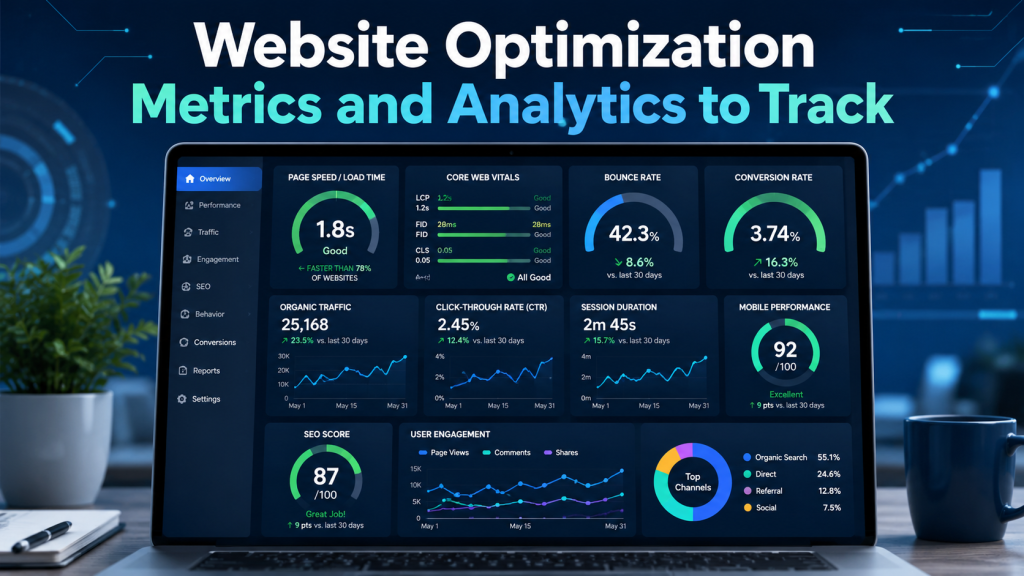
You cannot improve what you do not measure. Tracking the right numbers tells you exactly where your website optimization efforts are paying off and where they still need work.
Different metrics serve different purposes, so it helps to group them by category rather than treating them all the same way.
| Metric Category | Examples | What It Tells You |
|---|---|---|
| SEO metrics | Organic traffic, keyword rankings, impressions | How visible you are on Google |
| Performance metrics | Core Web Vitals, load time | How fast your site feels to users |
| Engagement metrics | Bounce rate, session duration | How well content holds attention |
| Conversion metrics | CTR, form submissions, sales | How effectively you turn visitors into customers |
SEO Metrics
Organic traffic and keyword position show whether your SEO optimization work is actually improving your standing in search results over time.
Performance Metrics
Core Web Vitals measure loading speed, interactivity, and visual stability, all of which affect both rankings and real user satisfaction.
Conversion and Engagement Metrics
Bounce rate and conversion rate together reveal whether visitors are finding what they need or leaving frustrated before taking action.
Best Practices for Continuous Website Improvement
Optimization is not a project with a finish line. Search algorithms shift, user expectations rise, and competitors keep improving their own sites. Staying still means slowly falling behind.
Building small, consistent habits into your routine keeps your site performing well without requiring a massive overhaul every few months.
Keep Content Fresh and Updated
Revisit older articles regularly, update statistics, and add new information competitors may have missed since your last publish date.
Collect and Act on User Feedback
Simple surveys or feedback widgets reveal friction points real visitors experience that analytics alone cannot always show you.
Monitor Analytics Regularly
Set a monthly habit of checking Google Search Console and Analytics so problems get caught early rather than months later.
A/B Test Your Key Pages
Testing two versions of a landing page or headline helps you make decisions based on real data instead of guesswork.
Common Website Optimization Mistakes to Avoid
Even well-intentioned businesses make errors that quietly undo their optimization efforts. Recognizing these mistakes early saves both time and advertising budget down the road.
The most damaging issues are usually simple to fix once identified, yet they persist because nobody audits the site regularly enough to catch them.
Ignoring Mobile Users
A desktop-only mindset alienates the majority of Pakistani visitors who browse primarily through smartphones on daily basis.
Keyword Stuffing and Thin Content
Cramming keywords unnaturally into text hurts readability and can actively damage rankings rather than help them.
Overlooking Page Speed and Broken Links
Slow pages and dead links frustrate users and signal neglect, pushing both visitors and search engines away from trusting your site.
Website Optimization Tools You Should Know
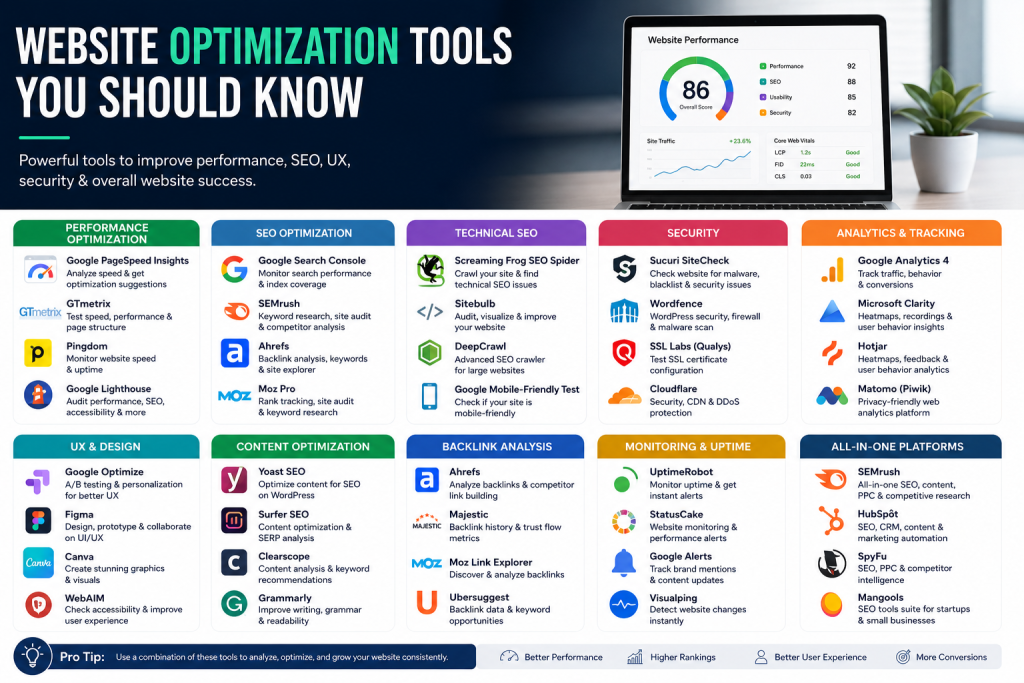
The right tools make optimization far less overwhelming. Most Pakistani businesses do not need an expensive stack, just a handful of reliable options covering the essentials.
Free tools cover most needs for small and medium businesses, while paid tools add depth for larger, more competitive projects.
| Tool | Type | Best For |
|---|---|---|
| Google Search Console | Free | Tracking indexing and search performance |
| PageSpeed Insights | Free | Measuring speed and Core Web Vitals |
| Google Analytics (GA4) | Free | Understanding visitor behavior |
| SEMrush | Paid | Keyword and competitor research |
| Ahrefs | Paid | Backlink and content analysis |
| Screaming Frog | Paid/Free tier | Technical site audits |
Free Tools Worth Starting With
Google Search Console and PageSpeed Insights give you direct data from Google itself, making them the first stop for any optimization effort.
Paid Tools for Deeper Analysis
Platforms like SEMrush and Ahrefs help larger businesses study competitors and uncover keyword opportunities not visible through free tools alone.
Final Thoughts: How [Brand] Can Help You Optimize Your Website
Website optimization is not a single fix, it is a continuous commitment across speed, content, structure, and user experience. Businesses that treat it seriously consistently outperform competitors who treat their website as a one-time expense rather than a growing asset.
At [Brand], we work with Pakistani businesses to build faster, more visible, and more effective websites from the ground up. If your site is not delivering the traffic or leads it should, our team can audit it and build a clear roadmap toward better results.
Frequently Asked Questions (FAQs)
1: What is website optimization in simple words?
It is the process of improving your website’s speed, content, and usability so it ranks higher and converts more visitors into customers.
2: How long does website optimization take to show results?
Most businesses start seeing measurable improvement within two to three months, though full results often build over six months or longer.
3: Is website optimization a one-time task?
No. It is an ongoing process that requires regular audits, updates, and testing to keep pace with changing algorithms and user expectations.
4: How much does website optimization cost in Pakistan?
Costs vary widely based on site size and current issues, ranging from basic audits to full ongoing optimization retainers.
5: What is the difference between SEO and website optimization?
SEO is one part of website optimization, focused specifically on search rankings. Website optimization also includes speed, UX, accessibility, and conversions.
Related Links :
https://webhelp.pk IT Solutions & Development Technical Support Company
https://infusions.pk Organic Herbal Store
https://eeshaal.com Travel & Tour Company
https://gulbergoffice.com Real Estate Company
