
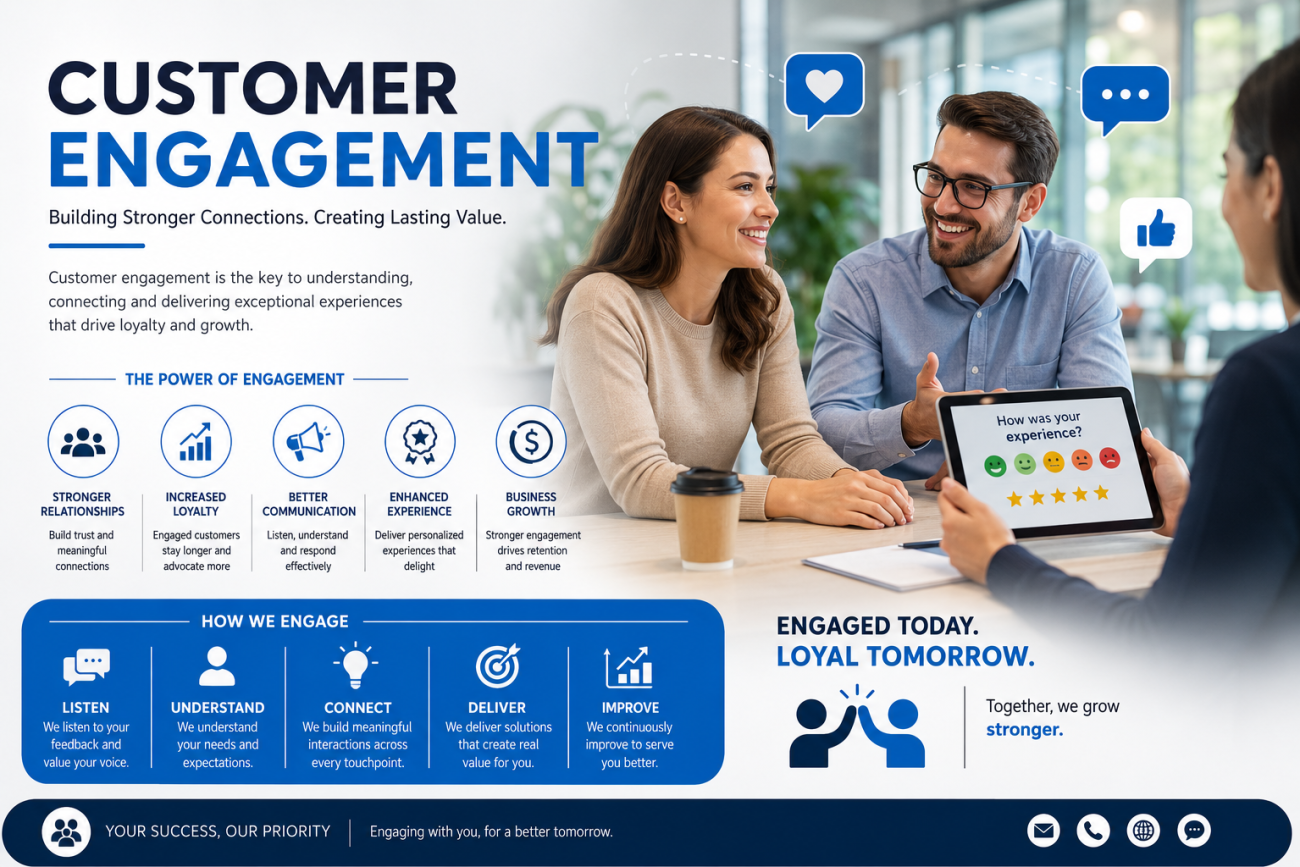
Every business owner in Pakistan wants the same thing. Customers who come back again and again. That is the whole point of customer engagement. It is not a buzzword. It is the reason some brands grow fast while others fade away quietly.
This guide breaks down everything you need to know about customer engagement in simple, easy English. We will cover the basics, the strategy, the metrics, and real examples that actually work in Pakistan’s market. No fluff. Just useful information you can apply right away.
What is Customer Engagement?
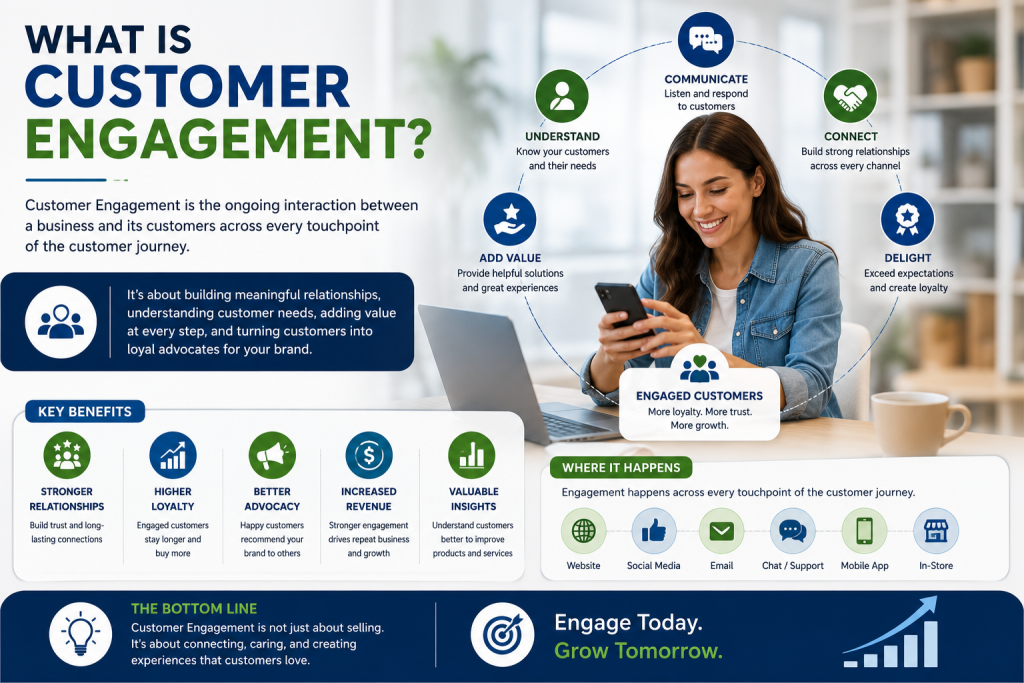
Customer engagement is the ongoing relationship between a business and its customers. It happens through customer touchpoints like your website, WhatsApp, social media, and even a simple phone call from your support team. It goes far beyond a single sale. Real engagement means building meaningful interactions that keep people coming back for more.
Think of it like a friendship. You do not become close friends with someone after one conversation. You build trust over time through small, consistent moments. That is exactly what customer relationship building looks like in business. Every reply, every follow-up message, and every helpful gesture adds up.
Customer Engagement vs. Customer Experience — What’s the Difference?
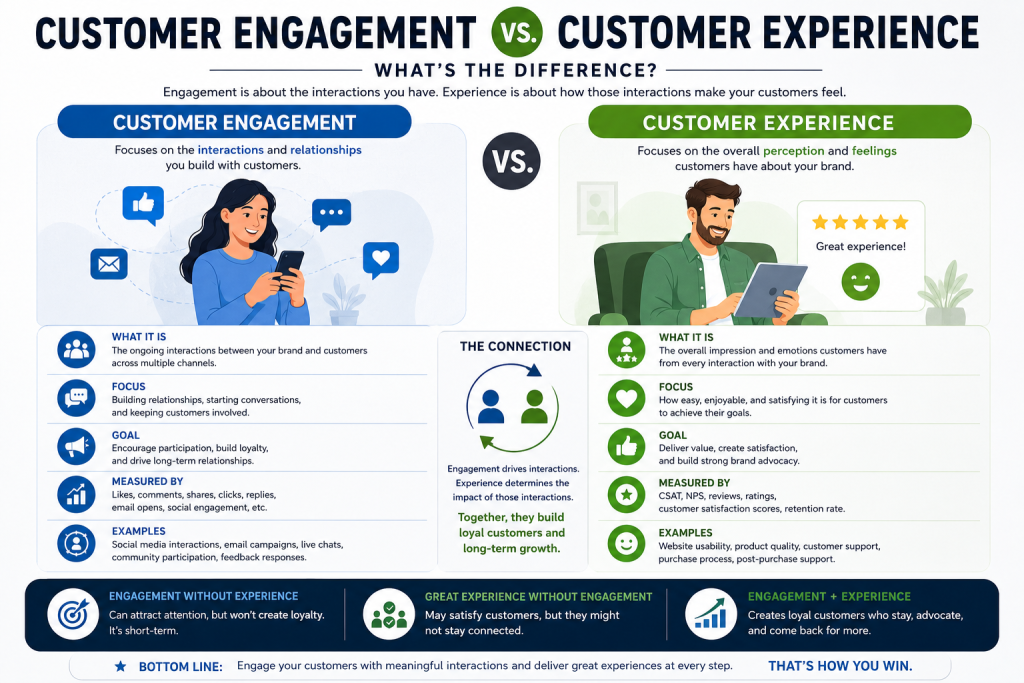
People often mix these two terms up but they are not the same. Customer experience is how a person feels during one interaction, like checking out on your website. Customer engagement is the bigger picture. It is the sum of all those experiences over weeks, months, and years, building lasting brand loyalty along the way.
Why Customer Engagement Looks Different for Pakistani Businesses
Pakistan has its own rhythm. WhatsApp is often more trusted than email here. Cash on delivery still dominates online shopping. So engagement strategies from Western markets do not always translate directly. Local businesses need to meet customers where they already spend time, which usually means mobile apps and messaging platforms.
Why Customer Engagement Matters for Business Growth
Here is a simple truth. It costs far less to keep an existing customer than to find a new one. Strong customer engagement directly boosts your customer lifetime value (CLV), which means each customer spends more with you over time. That single metric can make or break a business’s long-term profits.
Engaged customers also become your unpaid marketing team. They leave good reviews, tell their friends, and defend your brand online when things go wrong. In a country where word-of-mouth still carries huge weight, that kind of trust cannot be bought with ads alone.
The Link Between Customer Engagement and Revenue in Pakistan’s Market
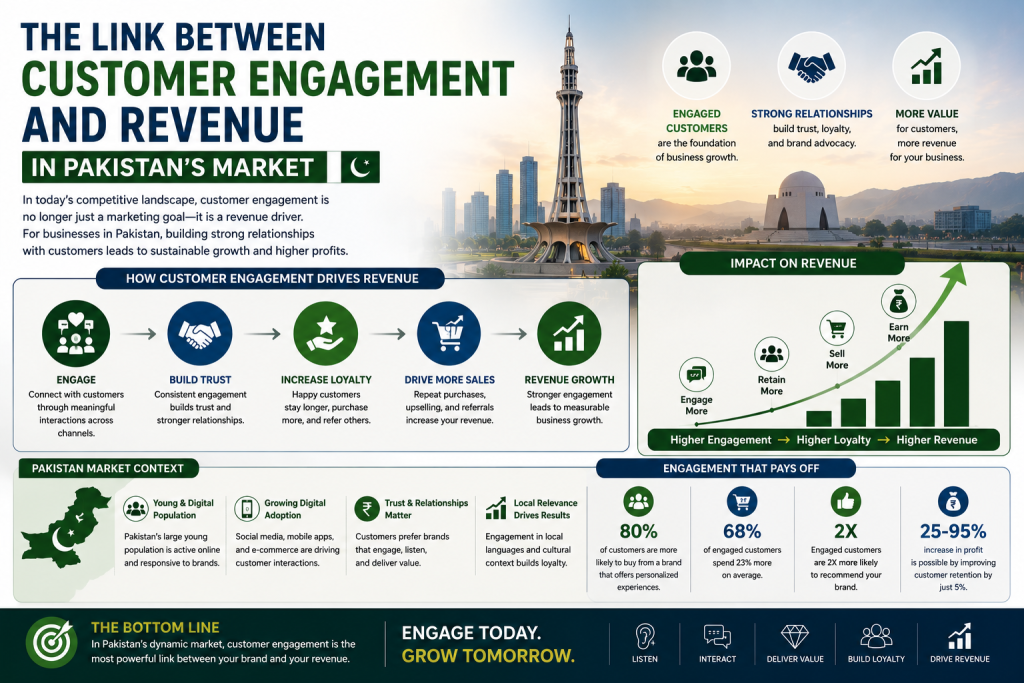
Local e-commerce data shows repeat customers spend up to three times more than first-time buyers. Brands like Daraz have built entire loyalty ecosystems around this fact. When you invest in keeping customers happy, your revenue grows on its own without extra ad spend.
Common Customer Engagement Challenges Teams Face
Building strong customer engagement is not always smooth sailing. Many Pakistani businesses struggle with limited digital literacy among older customers or unreliable internet in smaller cities. Trust is another huge hurdle since online fraud stories have made many buyers cautious about sharing personal details or making advance payments.
Language also plays a bigger role than most marketers realize. A message written only in formal English can feel distant to someone more comfortable in Urdu or Roman Urdu. Teams that ignore this often see lower customer satisfaction scores even when their product is genuinely good.
Language, Trust, and Digital Adoption Barriers in Pakistan
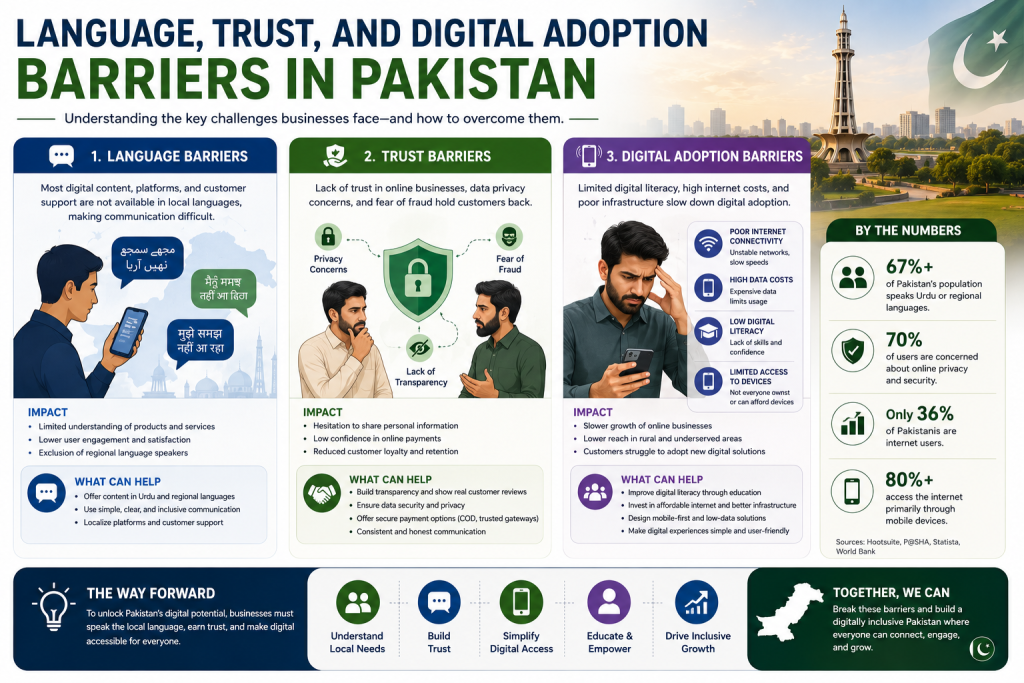
Smaller businesses often skip Urdu content entirely, which quietly pushes away a huge chunk of their audience. Fixing this is not expensive. It just takes intention, a bit of translation work, and a willingness to speak the way your customers actually speak.
How to Build a Winning Customer Engagement Strategy
A good strategy starts with knowing your audience deeply, not guessing. Personalized experiences work far better than generic blasts sent to everyone at once. If a customer bought baby products last month, do not send them ads for gym equipment. Simple logic like this makes a massive difference.
The table below breaks down three approaches that consistently work well for brands operating in Pakistan.
| Strategy | What It Does | Best For |
|---|---|---|
| Behavioral Segmentation | Groups customers by actual buying habits | E-commerce and retail |
| Multi-Channel Engagement | Uses WhatsApp, SMS, and social media together | Local service businesses |
| Lifecycle Personalization | Adjusts messaging as customer relationship grows | Subscription and SaaS brands |
Behavioral Segmentation for Pakistani Consumers
Instead of treating every customer the same, group them by what they actually do. Someone who browses but never buys needs a different message than someone who orders every week. This small shift alone can lift response rates significantly.
Multi-Channel Engagement (WhatsApp, Social Media, SMS)
WhatsApp Business has quietly become the backbone of customer communication in Pakistan. Pairing it with Instagram and SMS reminders creates a consistent presence without overwhelming the customer with too many messages at once.
Lifecycle-Based Personalization
A brand-new customer needs guidance and reassurance. A loyal customer of two years wants recognition and rewards. Adjusting your tone and offers based on where someone sits in this journey keeps the relationship feeling fresh rather than repetitive.
How to Measure Customer Engagement (Key Metrics)
You cannot improve what you do not measure. Tracking the right numbers tells you whether your efforts are actually working or just creating noise. Below are the three metrics that matter most for businesses trying to understand their customer retention rate and overall engagement health.
Start simple. Pick two or three metrics, track them weekly, and adjust your approach based on what the numbers tell you rather than guesswork alone.
| Metric | What It Measures | Why It Matters |
|---|---|---|
| DAU, WAU, MAU | Daily, weekly, monthly active users | Shows how often people use your product |
| Engagement Rate | Clicks, replies, and interactions per channel | Reveals which channels actually work |
| Customer Retention Rate | Percentage of customers who stay over time | Direct signal of long-term loyalty |
Active Users (DAU, WAU, MAU)
These three numbers show how sticky your product or service really is. A high monthly count but low daily count usually means customers visit occasionally rather than forming a real habit around your brand.
Engagement Rate by Channel
Not every channel performs equally. Some brands find WhatsApp replies outperform email opens by a huge margin in Pakistan. Tracking this per channel helps you stop wasting budget on platforms that quietly underperform.
Customer Retention Rate
This is the ultimate scoreboard. A rising retention rate almost always means your customer satisfaction efforts and Net Promoter Score (NPS) initiatives are working together well behind the scenes.
Real-World Customer Engagement Examples
Sometimes the best way to learn is by watching what already works. Local and global brands both offer valuable lessons here, and the good news is you do not need a massive budget to apply similar thinking to your own business.
Small, consistent actions often beat expensive, one-time campaigns. That lesson comes through clearly in the examples below.
How Local Brands (e.g., Daraz, Foodpanda) Drive Engagement
Daraz built a loyalty and rewards system that turns casual buyers into repeat shoppers through points, vouchers, and personalized recommendations. Foodpanda uses order history to suggest meals a customer is likely to enjoy again, keeping the app top of mind during hunger moments.
Global Brand Lessons Pakistani Businesses Can Apply
Starbucks built habit-forming loyalty through its mobile app rewards. Nike focused on community and shared identity rather than just selling shoes. Both lessons apply here too. Pakistani businesses can build the same emotional pull without needing a global budget, just consistency and genuine care.
How to Choose the Right Customer Engagement Platform
Picking the right tool saves time and prevents costly mistakes down the road. Look for platforms offering CSAT scores tracking, WhatsApp integration, and automation that does not feel robotic or impersonal to your customers.
Do not chase the biggest name in the market. Choose based on what your team can actually use well and what fits your customer base’s habits.
Must-Have Features for Pakistani SMEs and Enterprises
WhatsApp Business API support is non-negotiable here. Beyond that, look for simple dashboards, Urdu language support, and pricing that scales with your business rather than locking you into enterprise-level costs from day one.
Budget-Friendly Tools vs. Enterprise Solutions
Smaller teams can start with affordable tools built around WhatsApp and email automation. Larger enterprises with bigger customer bases may need dedicated platforms offering deeper analytics and multi-team collaboration features.
Future of Customer Engagement — Trends to Watch in 2026
The next wave of customer engagement is being shaped by artificial intelligence and mobile-first habits. Chatbots are getting smarter, WhatsApp commerce is exploding, and customers now expect instant replies rather than waiting hours for a response.
Businesses that adapt early will capture loyalty before competitors even notice the shift happening around them.
AI, WhatsApp Commerce, and Mobile-First Engagement in Pakistan
AI-powered chat assistants are already helping local businesses respond within seconds instead of hours. Combined with WhatsApp’s growing shopping features, this trend is quickly becoming the new standard for how Pakistani brands connect with their customers.
Key Takeaways: Building a Loyal, Engaged Customer Base
Strong customer engagement is not built overnight. It grows through consistent, personalized experiences delivered across the right channels. Focus on understanding your audience, measuring what actually matters, and adjusting your approach as their needs change over time.
Start small if you need to. Track your customer retention rate, listen to feedback, and keep showing up for your customers the way you would for a good friend. That is really what customer engagement comes down to in the end.
FAQs
Q1: What is customer engagement?
Customer engagement is the ongoing relationship a business builds with its customers through meaningful interactions across different touchpoints.
Q2: Why is customer engagement important for business growth?
It boosts customer lifetime value, drives repeat sales, and turns happy customers into your brand’s biggest advocates.
Q3: What is the difference between customer engagement and customer experience?
Customer experience is a single interaction while customer engagement is the full relationship built over time.
Q4: What are some effective customer engagement strategies?
Behavioral segmentation, multi-channel communication, and lifecycle-based personalization are among the most effective strategies today.
Q5: How can I measure customer engagement?
You can measure it using active user rates, channel-wise engagement rate, and customer retention rate.
