

Residential property investment continues to attract Pakistani buyers who want steady income without gambling on volatile markets. From bustling Karachi apartments to quiet Islamabad sectors, more people now see residential property as a dependable path toward financial security. Unlike stocks or crypto, a house or plot gives you something you can actually touch, something that keeps generating rental income month after month while quietly building capital appreciation over the years. Whether you’re drawn to single-family homes for their simplicity or apartment buildings for higher returns, understanding your options matters before you commit your savings. This guide breaks down everything a first-time investor needs, from choosing the right commercial property or residential unit to avoiding costly rookie mistakes.
What Is Real Estate Investing?

Real estate investing simply means putting your money into property with the goal of earning a return, either through rental income, price appreciation, or both. It’s one of the oldest forms of wealth building, and in Pakistan, it remains a favorite among salaried professionals and business owners alike. Unlike stocks, property gives you something tangible you can see and touch.
Why Residential Property Investment Is Gaining Popularity in Pakistan
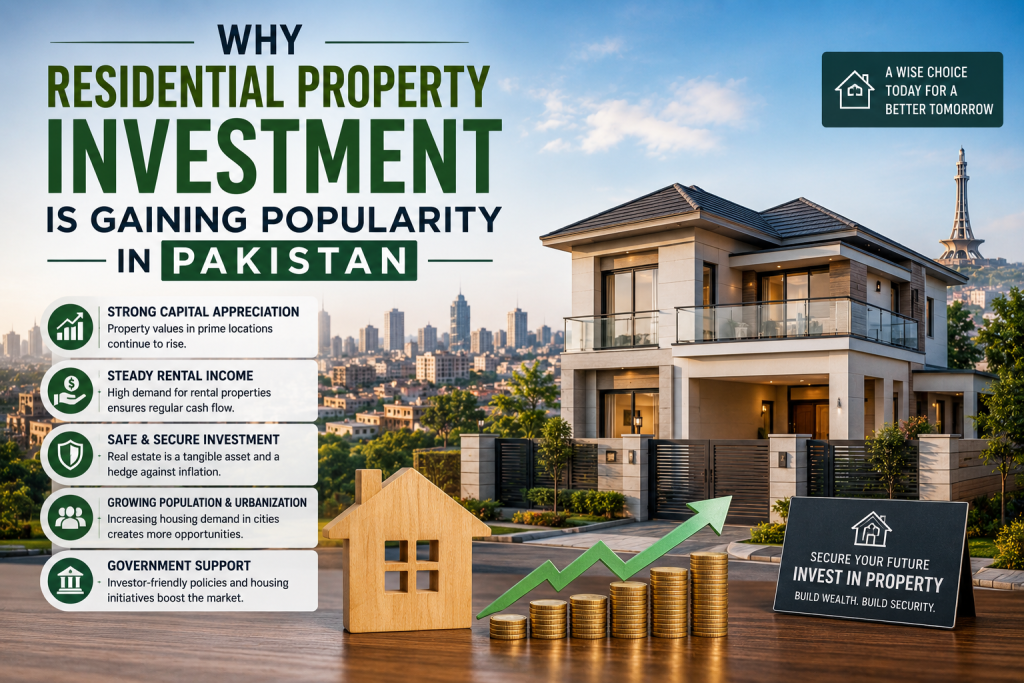
Rising urbanization and a growing middle class have pushed demand for housing in cities like Lahore, Islamabad, and Karachi. Many investors also view residential property as a hedge against inflation, since rents and property values tend to climb alongside the cost of living. Add to that the emotional comfort of owning a physical asset, and it’s easy to see why property investment continues to attract new buyers every year.
Types of Property Investments
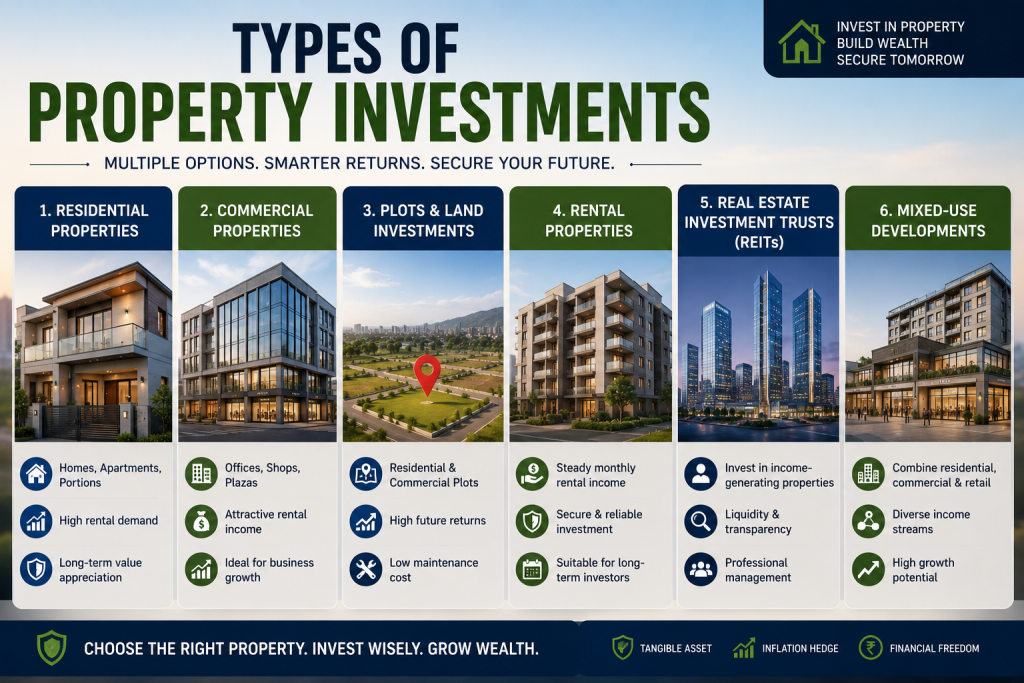
Before you invest a single rupee, you should understand your options. Broadly speaking, property falls into two categories: residential and commercial. Residential property includes homes people live in, while commercial property serves businesses and generates income through leases to shops, offices, or warehouses.
Within residential property, you’ll find several subcategories worth knowing. Single-family homes remain the most common choice for first-time investors because they’re easier to manage and finance. Multi-unit properties such as apartment buildings and duplexes offer multiple income streams from one purchase, though they demand more hands-on management. Some investors in tourist-heavy areas like Murree or Hunza also explore short-term vacation rentals, which can generate higher returns during peak seasons.
| Property Type | Typical Buyer | Income Potential | Management Effort |
|---|---|---|---|
| Single-family homes | First-time investors | Moderate | Low |
| Apartment buildings | Experienced investors | High | High |
| Duplexes | Mid-level investors | Moderate to High | Medium |
| Short-term vacation rentals | Niche investors | Seasonal, variable | High |
| Retail, office and industrial property | Business-focused investors | High, stable leases | Medium |
Active vs. Passive Real Estate Investing
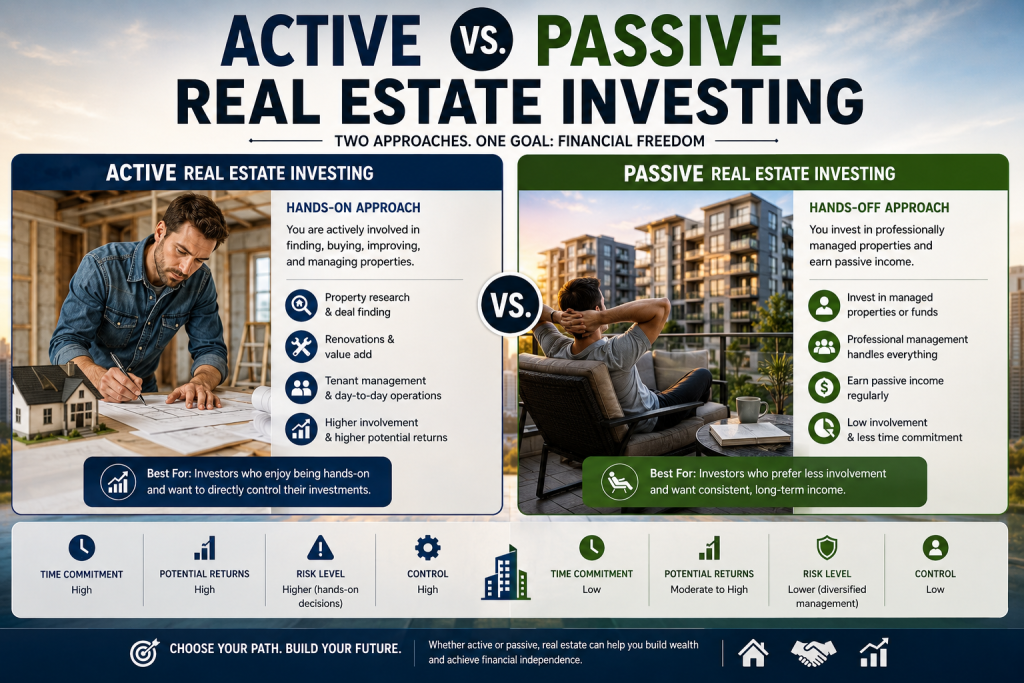
Not every investor wants to spend weekends fixing leaky taps or chasing rent payments. That’s where the choice between active and passive investing comes in, and it shapes how much time and energy you’ll actually put into your property.
Active (Direct) Property Management
Active investing means you own the property directly and handle the day-to-day responsibilities yourself. You screen tenants, collect rent, and arrange repairs. It demands more time, but it also gives you full control over decisions and typically higher profit margins since you’re not paying a management company.
Passive (Indirect) Options Like REITs in Pakistan
Passive investing lets you earn from real estate without owning physical property. Real Estate Investment Trusts, or REITs, have started gaining traction in Pakistan, allowing everyday investors to buy shares in large property portfolios. This route suits people who want exposure to real estate returns without the headaches of tenant management or maintenance calls.
How to Find the Right Investment Property
Finding a good property isn’t about luck. It comes down to research, patience, and knowing where to look. The right location can make or break your investment, so this step deserves serious attention before you fall in love with any listing.
Best Cities and Societies for Residential Property Investment
Islamabad’s Bahria Town and DHA sectors remain popular for their infrastructure and long-term appreciation potential. Lahore’s DHA phases and Bahria Orchard also attract steady demand, while Karachi’s Clifton and Bahria Town areas appeal to investors chasing rental yield. Each city carries its own price trends, so comparing recent transaction data before buying pays off.
Using Real Estate Agents, Portals, and Property Expos
A trustworthy local agent brings knowledge that online listings simply can’t replace. Platforms like Zameen.com and Graana.com give you a starting point for price comparisons, while property expos let you meet developers directly and sometimes negotiate better payment plans. Combining all three sources gives you a fuller picture of the market.
How to Start Investing in Property — Step by Step
Getting started can feel overwhelming, but breaking it into clear steps makes the process manageable. Here’s a simple roadmap that most successful investors in Pakistan follow before making their first purchase.
| Step | What to Do |
|---|---|
| 1 | Set your budget and financing plan |
| 2 | Research the location and society reputation |
| 3 | Verify property documents and legal title |
| 4 | Calculate expected rental yield |
| 5 | Understand landlord-tenant regulations in Pakistan |
Each of these steps protects you from common pitfalls. Skipping document verification alone has cost many buyers their life savings, so never rush this part no matter how good the deal looks.
Benefits of Buying an Investment Property
Property investment offers more than just monthly rent. When done right, it builds long-term wealth while giving you a sense of financial security that few other assets provide in the Pakistani context.
Rental Income, Capital Appreciation, and Inflation Hedge in the Pakistani Market
Rental income provides a steady cash flow that can cover your mortgage and still leave a profit. Meanwhile, property values in prime locations have historically appreciated faster than inflation, protecting your purchasing power over time. As one Lahore-based real estate consultant put it, “Property doesn’t just sit there. It works quietly in the background while you sleep.” Combine steady rent with rising resale value, and you’ve got a two-pronged wealth strategy that few investments match.
Cash Flow and Risk Tolerance — What to Know Before Investing
Cash flow is the heartbeat of any rental property. Get it wrong, and even a beautiful house can turn into a financial burden rather than an asset. Understanding your own risk tolerance matters just as much as understanding the numbers.
How to Calculate Cash Flow on Rental Property in Pakistan
Start by subtracting your total monthly expenses, including maintenance, taxes, and society charges, from your expected rental income. If the result stays positive after accounting for occasional vacancies, your property likely carries itself financially. Always build in a buffer for unexpected repairs, since even well-maintained buildings throw surprises at owners now and then.
Key Considerations Before Buying Investment Property
A few factors separate a smart purchase from a regretful one. Location tops the list, since identical houses in different neighborhoods can carry wildly different rental demand and resale value.
Location, Documentation, Ongoing Costs, and Market Timing
Beyond location, always verify that documentation is clean and free of disputes before transferring any money. Ongoing costs such as society maintenance fees, property tax, and repairs add up quickly, so factor them into your budget from day one. Market timing also plays a role. Buying during a price dip, rather than chasing a hyped launch, often produces better long-term returns.
Common Mistakes First-Time Property Investors Make
Even experienced buyers slip up occasionally, but first-time investors tend to repeat the same avoidable errors. Learning from these mistakes beforehand can save you both money and stress down the road.
Skipping Due Diligence, Ignoring Hidden Costs, and Overpaying in Hot Markets
Many new investors get swept up in excitement and skip verifying the seller’s title or the society’s legal status, which can lead to costly disputes later. Others underestimate ongoing costs like maintenance and taxes, only to find their profits shrinking month after month. Overpaying during a market rush, driven by fear of missing out, is another trap that experienced investors learn to avoid through patience and research.
Is Property Investment Right for You? — Final Thoughts
There’s no single right answer here, since every investor’s goals and financial situation look different. Some people thrive on the hands-on involvement of managing a rental unit, while others prefer the passive comfort of watching value grow quietly over the years.
Weighing Residential Property Investment Against Other Investment Options in Pakistan
Compare property against other options like mutual funds or gold before committing your savings. Residential property typically demands more upfront capital and patience, but it also offers tangible ownership and steady rental income that few other investments can match. If you’re comfortable with a longer time horizon and occasional maintenance headaches, residential property investment could be one of the smartest financial decisions you make this year.
